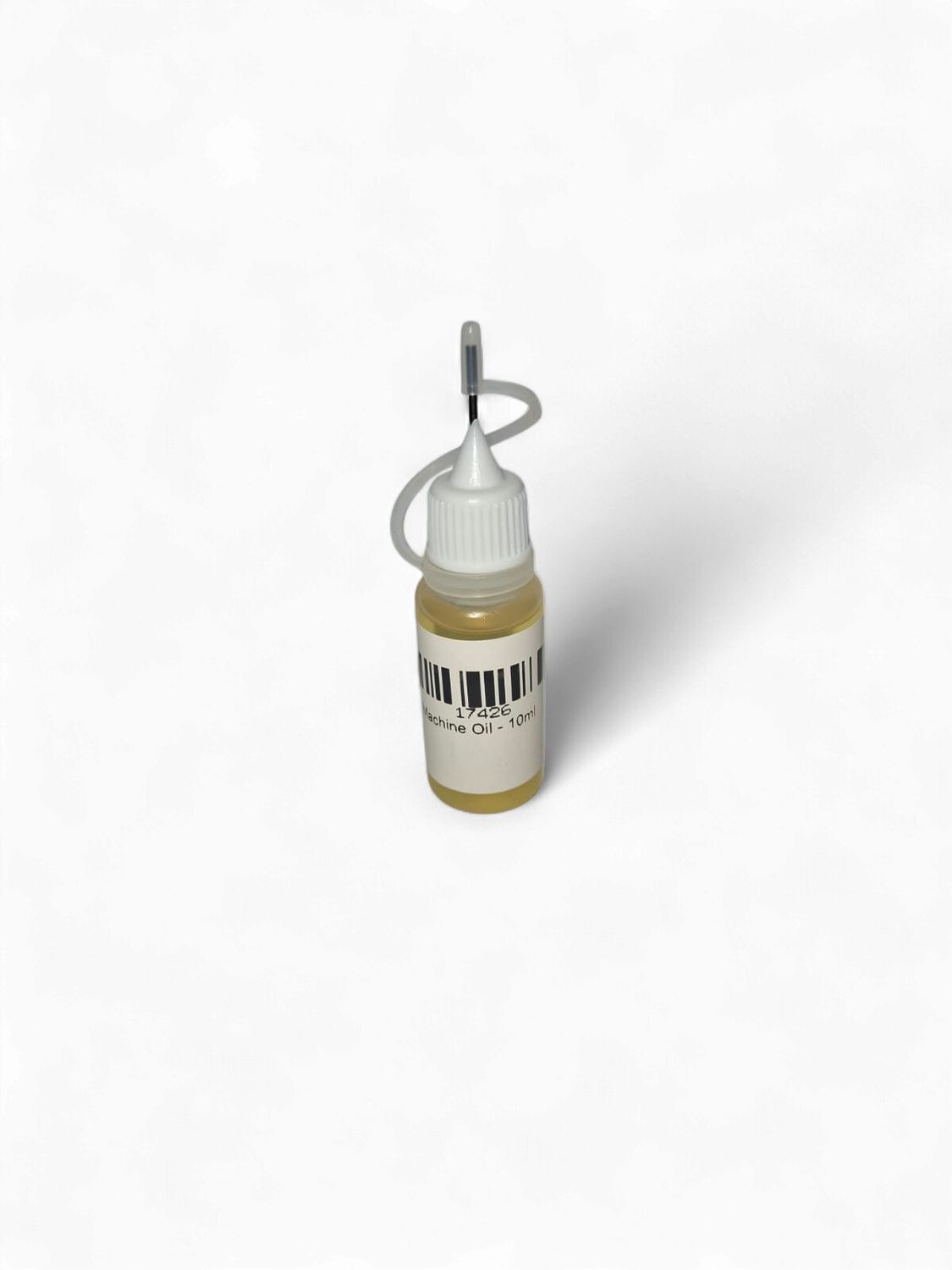
3d Printer Machine Oil - 10ml
Share
R21.74
Sold out
Sold out
3d Printer Machine Oil - 10ml
Share
Product details
Brand: Just Colours
Refined Mineral Oil – 3D Printer Lubricant – Technical Specifications:
| Lubricant Type | – Refined Mineral Oil |
| Volume | – 10ml |
| Viscosity | – Low (Thin, Penetrating) |
| Colour | – Clear |
| Dust Attraction | – Low (Less than Silicone-Based Greases) |
| Reactivity | – Non-Reactive (Safe for Most Metals & Plastics) |
| Application Frequency | – More Frequent than Silicone-Based Grease |
| Suitable For | – Linear Rails, Smooth Rods, Lead Screws, Bearings, Bushings |
| Not Suitable For | – High-Load Applications, Router-Based CNC Machines |
| Application Method | – Drop, Wipe, or Brush Apply |
| Compatible Printers | – FDM 3D Printers |
Handy Tips for Using Refined Mineral Oil on Your 3D Printer:
1: Mineral oil has a lower viscosity than silicone-based grease — it is thin and free-flowing, allowing it to penetrate tight clearances, narrow bearing channels, and hard-to-reach areas of your printer's motion system that thicker greases cannot easily coat. This makes it particularly effective on linear rails, smooth rods, and lead screw threads where even coverage along the full travel length is important for consistent motion.
2: Because mineral oil is less viscous than grease, it will migrate, thin out, and evaporate from surfaces more quickly under heat and repeated movement. Plan for more frequent re-application compared to silicone-based grease — inspect and re-lubricate your motion components every 4–8 weeks of regular printing, or sooner if you notice increased motion noise, binding, or print quality degradation caused by friction in the motion system.
3: One of the key advantages of mineral oil over grease is that it attracts significantly less dust and debris. Thick greases act like a magnet for airborne particles, filament dust, and PTFE shavings — over time this builds up into a grinding paste that accelerates wear on rods and linear rails. Mineral oil's thin, clean film stays relatively free of contamination between applications, making it a better long-term choice for open-frame printers in dusty environments.
4: Mineral oil is non-reactive with most metals and plastics commonly found in 3D printers — including aluminium extrusions, steel rods, brass lead screw nuts, and POM (Delrin) linear bearings and bushings. It will not swell, crack, or degrade the plastic components it contacts, making it safe to apply to the full range of motion system components without risk of material compatibility issues.
5: ⚠️ Mineral oil is not suitable for high-load applications — it does not provide the load-bearing film strength of EP (extreme pressure) greases or heavy machine oils. It is specifically recommended for the light-duty, low-load motion systems of FDM 3D printers. Do not use it on router-based CNC machines, spindle bearings, or any application where the bearing surfaces experience significant cutting forces or radial loads — use a dedicated EP grease or machine oil rated for the load instead.
Display prices in:ZAR