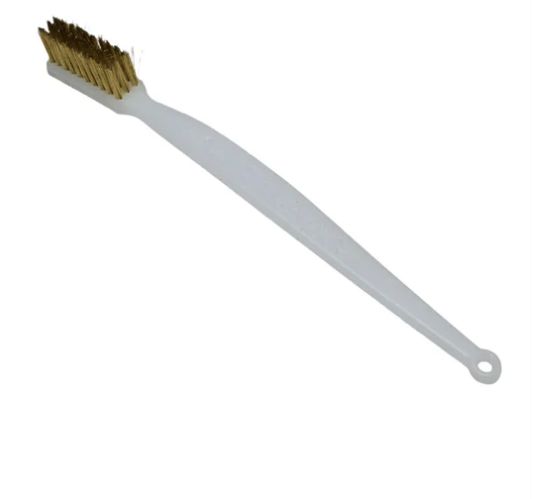
Brass Wire Toothbrush - Clean 3D Printer Nozzles
Share
R25.22
Buy and save
Buy and earn R0.14 Loyalty for your next purchase
Loyalty is a discount program that lets you buy products and earn points to redeem on your next purchase. Your Loyalty balance is updated when you pay online or in-store. The Loyalty amount shown on this page can be recalculated at the checkout.
In stock
1
Brass Wire Toothbrush - Clean 3D Printer Nozzles
Share
Product details
Brass Wire Toothbrush – Technical Specifications:
| Brush Type | – Brass Wire Bristle Toothbrush Style |
| Bristle Material | – Brass (Copper-Zinc Alloy) |
| Handle Material | – Plastic |
| Bristle Hardness | – Soft-Medium (Non-Scratch on Brass & Steel) |
| Max Temperature Tolerance | – 500°C (Brass Bristles) |
| Bristle Configuration | – 3-Row Wire Bristle Head |
| Overall Length | – ~155mm (Typical) |
| Head Width | – ~10mm |
| Applications | – 3D Printer Nozzles, Hotend Cleaning, Brass & Copper Surface Cleaning, PCB Flux Removal, Soldering Iron Tip Cleaning |
Handy Tips for Using the Brass Wire Toothbrush for 3D Printer Nozzles:
1: Always clean your nozzle at printing temperature — heat the hotend to your normal printing temperature (or 10–20°C above) before brushing. At temperature the residual filament on the nozzle exterior is soft and pliable, making it easy to brush away cleanly. Never attempt to scrub a cold nozzle — hardened filament will not budge and you risk damaging the nozzle surface or thermistor wires with excessive force.
2: Brass bristles are specifically chosen for nozzle cleaning because brass is softer than the steel and hardened steel used in most nozzles. This means the bristles clean effectively without scratching or gouging the nozzle surface. Never use a steel wire brush on brass or plated nozzles — steel bristles will scratch the nozzle, damage the tip geometry, and can leave metal particles that contaminate your next print.
3: Use short, light scrubbing strokes along the length of the nozzle and around the tip — do not press hard. The goal is to remove softened filament residue and carbonised buildup from the exterior surface, not to abrade the metal. Pay particular attention to the nozzle tip where filament ooze accumulates and burns onto the surface during printing, causing blobs and first-layer adhesion issues.
4: This brush is also excellent for removing flux residue from PCBs and solder joints after soldering. Brass bristles are gentle enough not to damage PCB traces or component leads while being firm enough to scrub away rosin or no-clean flux residue effectively. Use with a small amount of isopropyl alcohol (IPA) for the best results on stubborn flux deposits.
5: Keep the brush dedicated to one use — a brush used for nozzle cleaning will accumulate traces of filament material and carbon. Using the same brush for PCB cleaning risks contaminating your boards. Label or colour-code your brushes by application, and replace the brush when the bristles become bent, flared, or heavily discoloured from carbon buildup, as a deformed bristle head loses effectiveness quickly
Display prices in:ZAR